Category: Uncategorized

  • Campus naturalist

    Writer Barry Lopez proposed some time ago that a university have a student with appropriate skills receive a stipend to do research, record data, and inform the public about the natural environment of the campus. There would be a title like University Naturalist or College Naturalist. Over time, data about the ecology of the campus and the region would accumulate, and people might take a wider interest in both. I think his proposal was in the final chapters of Crossing Open Ground. I haven’t heard of any campuses that have picked up on this idea.

    One other virtue of the idea is that it models a public writing role for students on campus. So much of the work they do is never read outside the confines of the classroom. Surely some of the work students do could be shaped so as to have value for a wider audience. Imagine how much of the alienation of higher education would be drained away if that were so.

    PS. Here is an earlier blog entry with a somewhat different brainstorm about Lopez’s idea:

    I was reading the last essay in Barry Lopez’s essay collection called Crossing Open Ground yesterday when I came across his suggestion, in the final essay, that a university appoint a campus naturalist to study, preserve knowledge about, and teach about the natural history of the campus. I thought immediately of the St. Joseph River here at IUSB. Said by some to be polluted so thoroughly that one shouldn’t touch it, the river glides past our campus and through downtown South Bend, forming the scenic core of the city.

    Imagine a botany course that studied the natural history of the river, posting its findings on a weblog every few days, and accompanied by a history class that placed the river in the context of North American history, perhaps for a couple of weeks, and an anthropology class that also had a unit contextualing the river from that discipline’s perspective, and a sociology class that studied the social systems that spring up around rivers, and so forth. All of them could post their findings on the weblog, and then shape the best of it into a more lasting presentation on a wiki site. Link the whole package to the university’s home page, so there was almost always new content there from student-conducted research, along with all sorts of other new content that ought to be generated on a campus weblog. I would think that other campuses would send students to the site, high schools would send their students to the site, regional newspapers would visit and write stories, donors would pop by once in awhile to see how their money is being spent and see new things each time they visit, and so forth. And students would see that knowledge is something people like them make, preserve, present, not consume.

    I like that last sentence: “And students would see that knowledge is something people like them make, preserve, present, not consume.”
  • May 2013 Fargo Archive Pages

    May 10

    • Publishing in the past
      • I’m just wondering whether Fargo will let a fellow publish in the past. I backdated this posting quite a bit as a test. Wonder, too, if the RSS will notice it. PS. Testing Jeffrey’s script for adding a tweet link at the top of a post–a success. Now testing an informal tag+keyword search script–it works. Now testing Theron’s tag script.
  • Fargo, so far

    Just thinking out loud here. Based on my use of the Fargo outliner so far, I have this to say:

    1. I tried outlines before because someone I respected spoke up for them in public for years. Until now, I never really got the point.

    2. As a outliner newbie, I’m happy about the outlining functions. They seem clear and practical to me as a solo user. They bring organizing and composing into plainer view for me as a writer. The ease of web publishing is very useful, too.

    • a. Two things that would help me–maybe just me, maybe nobody else–would be, eventually, no rush, i) to have a word count option on an outline, and ii) to be able to paste in a paragraph from Word and have it appear as a single headline instead of as a bunch of headlines. Item ii is kind of big for me since I have to work in Word quite a bit.

    3. For years Dave Winer has been explaining how important it is to send content to Twitter from one’s own realm, rather than to live as a writer inside Twitter. I’ve been utterly persuaded and I have to guess Fargo is heading there. This seems vital. I hope I’m reading the right tea leaves.

    4. I have a very strong sense that collaboration is going to be one of the huge features here–more likely, a whole collection of features. I’m very eager to see that unfold–maybe hungry is a better word.

  • The Saint Joseph River masterpiece

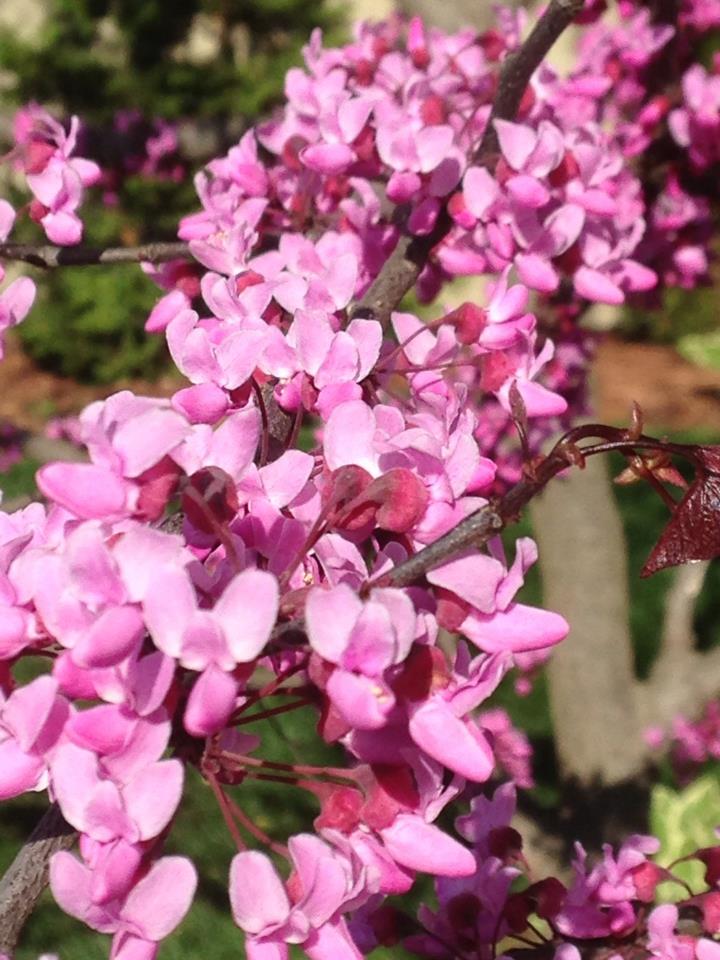
    The concept: Build a group of 250 donors who will each contribute the cost of one native spring-flowering tree a year for five years. Plant care-free native spring-flowering trees in great numbers along the river in South Bend. Within a few years the flowering season for dogwoods and redbuds would become very extravagant. The river during those weeks would become a very desirable destination, among the most noteworthy sights to be seen in the region. Beauty leading to renewed community pride, new economic activity…

    Redbud

    Native trees

    • Low needs for care
    • Longevity and high rate of survival

    Spring flowering

    • Extravagance of display in spring
    • Simultaneous flowering before their leaves come out–a very fancy showing

    Likely varieties

    • Dogwood
    • Redbud

    Budget

    • A group of 250 donors
    • Commitment to sponsor one tree a year for five years
    • Planting costs covered by the city? By grants?

    Research needed

    • Extra care needed the first year after planting? Extra watering?
    • Which particular native species are best? Which varieties of those species?
    • How to evaluate the best places to plant these varieties?

    Likely or possible partners

    • City of South Bend
    • Neighboring towns along the river.
      • Do the other towns and the county handle their own projects or is it a regional project?
    • The county.
    • Botanical team.
    • Landscaping and planting team.
    • Fund-raising team.
    • Publicity team.
    • Donate-a-tree campaign can be shared by community groups–churches, youth groups, schools, seniors groups, etc.

    Ways for people to feel a shared sense of pride and ownership in the project

    • Website of donors
    • Photo gallery contributed by community members
    • Annual photo or painting prize for showing off the spring flowering along the river
    • Other ways?

    Strategy ideas

    • Start with one stretch of the river so the impact is visible very soon?
    • Plant somewhat larger trees from the start?

    Brainstorming about other aspects of the project

    • Link to Bike the Bend or other community event?
    • Draw the concept out into neighborhoods with more trees or with front-yard displays of bulbs that flower at the same time?
    • The seed of a springtime festival of some kind?

    This outline also appears in an online version that will reflect new ideas and updates, posted here. It will not display in Internet Explorer.

  • Will I turn into a shrewd animal?

    In a 2013 Indiana University commencement address, a witty and irreverent David Brooks asked that question. He considered the fate of people who take all their values from the marketplace, filling their minds, he said, with a “mental materialism” that infects every aspect of their lives. Of that sort of materialism, he said:

    • If it’s all you’ve got, you lose the ability to speak in a sophisticated moral language, you have trouble thinking outside the categories of the market. You turn into shrewd animals, crafty self-preserving creatures who are adept at playing the game and who turn everything into a game.*

    A person doesn’t just shake off this disease, he implied. A person must have a contrasting source of strong values and voices:

    • So it’s important to have a counterculture. Many of us found our counterculture at university.

    This is not “the counterculture” of the 1960s but the long heritage of writers and activists who provide other ways of thinking–kinds of introspection and moral reflection, kinds of commitment not limited to the logic of buying and selling. For Brooks, by reading and rereading a person can draw on elements of this heritage over the course of a lifetime:

    • And if you do, you’ll find yourself living by a moral logic that is completely different than the logic of the shrewd animal.

    *These comments take place from 14:12 to 16:25 in the video.

  • Book, meet Blog. Blog, Book.

    Reading the unfolding story of the Fargo outliner in its Docs pages, the part where the “post to WordPress” feature is unpacked, I notice this sentence:

    • You can use the outliner to organize a library of posts you want to be able to access quickly.

    Now, to me, that sounds like the curtain in front of a showroom window just before a new model is announced. I start thinking about what might be behind the window. Blog posts, published over weeks and months via Fargo, yet organized into something larger. A way to bring the blogger’s ramble–the best parts of it, anyway–into some kind of shape.

    I’m thinking: book manuscript, tech manual, giant company report. Book manuscript.

    I’m thinking:

    The outliner publishes in time but organizes in space, making easier the birthing of these fraternal twins: blog and book manuscript. Via outlining, the practical, structural kinship of blog posts and book manuscript is revealed.

    […because some book projects are strengthened by the involvement of online readers along the way.]

  • Outlines and learning

    I am exploring specific uses for the new Fargo outliner. For example:

    –I have an annual report that is easier to complete in January when I always have a convenient note-taking tool available on the different computers I use. But now, having a single file, updated automatically, no matter which machine I use is, is great.

    –Because it lives online, this outliner works very well for research notes involving linked, online sources. And again, one file, different machines, auto-update is a real step forward for a person with less than perfect organizing skills, like me.

    But the thing that made me want to jot down some ideas here in this blog post is this one, which I hadn’t imagined until today:

    –As a teacher, I can use Fargo’s Reader to publish class notes that students can use as a skeleton or grid for their own in-class note-taking or out-of-class studying. I can guide their efforts with the grid of ideas or questions contained in the outline.

    –As semesters go by, I can easily continue to improve the outlines for a course.

    –Furthermore, students could fill out the details from an outline and share it as a learning resource for classmates in a course. [Any team of people could also do that in a workplace, building a reference or training manual for key elements of their work.]

    –if I asked students to fill out the details of an outline as we work on a course topic, I will see what they understand and where they are struggling. While any course assignment does this, an outline gives structure to the content, so it might be easier to see areas of strength and weakness.

    –My favorite of these last few ideas is this: School has enough wasted motion, enough going-nowhere assignments. But if students build outlines of course content, they can pass those along to the next semester’s students, who can use and refine them, then pass them on again. They make something that serves a living purpose, which feels good and is unlike the feeling one gets from too much of school anyway.

    It’s fun to think about uses for a writing tool that helps to foreground (at lightning speed) the structure of content. That structural aspect seems very positive for clear thinking and efficient learning.

  • Bedrock values

    Educators, politicians, diplomats, activists, business leaders, inventors, and all the rest of us, myself included–

    If your political or business or educational policy doesn’t align with these bedrock values, you are marching toward the dark side, and if you have influence or power, you are taking others there with you:

    People feel a need to be part of the world they live in. Most of us feel like we’re on the sidelines, spectators, consumers, eyeballs, credit card numbers, and that’s not what we want. We want meaning. We want to make a contribution. We want to do good and have that good make a difference. If you look at what people actually do, not the stories you read in the paper or hear on CNN, this is obvious. The [Boston] bombings not only worried people, for a short time when the scope of the danger was unknown, but people also saw the opportunity to get some of the precious stuff, meaning and relevance. (Scripting News)

    That’s Dave Winer. He goes on to describe the power relations common in journalism, but he might as well been talking about a wider group of industries and government functions:

    Why was this a theme of my [recent] talk at the Globe? Because the news industry has the ability to offer people exactly what they want, but they won’t do it. Their view of the world is that we’re out there and they’re inside. They talk, we listen. They are relevant, their lives have meaning. The meaning of our lives is not important to them. As long as they view it that way, people will continue to be frustrated by them, as long as they pay any attention. And more and more they’re chosing to not pay attention.

    The freshly learned insight that the media obscures people’s real experience could, he notes, become a visionary moment:

    This week the people of Boston learned something about the press because they told a big lie not just about a handful of them, but all of them, collectively. This presents a unique opportunity for a whole city to wake up and take over. I suggested at dinner that the people of Boston buy the Boston Globe, and give it a new direction. You know a city the size of Boston could buy the Globe. And you know what, it’s actually for sale. 🙂

    “This post was written quickly,” Dave Winer says at the start of the post, but he’s been working on these ideas for years and he writes with clarity and force. We know that people’s speech can matter, and that institutions often prefer not to hear from people, prefer to operate behind the scenes and, when in public, to speak to and not talk with. But there are episodes and tools that remind us of another way.

    See, for example, the third segment of Little Messages That Matter, an episode where a newspaper sees its readers as partners in public life. Longtime followers of Dave Winer and Jay Rosen will recognize their influence in other parts of that audio, too.

  • A defense of poetry in an age of spreadsheets

    My new radio essay in which poetry spits on the asphalt in disgust and walks off…

    I remember talking once with a high-ranking person from one of our area’s universities. Her training was in psychology, the field devoted to understanding the human mind. Somehow the topic swung round to poetry, and she said, “I don’t know why the university should be spending money offering courses in creative writing.” Along those same lines, you may have heard news stories from state houses across the land, where various leaders assert that public money should be used only for programs with directly measurable benefits. You don’t get the impression that poetry impresses those folks either. They must be thinking: you can’t pay the rent buying and selling poetry. In certain households, national poetry month must be seen either as a mystery or a joke. There may be radio listeners who love their NPR station but can’t be bothered with Garrison Keillor’s daily poetry episode. If we only knew the world through our bank statement, our company ledger book, or the front page of our local paper, they’d be right. In those venues poetry doesn’t matter much and American poets aren’t pulling their weight.

    But poetry is among the oldest human arts; it is found in every society. Little children love the wacky jingle-jangle of poetry; in concentration camps, when brutal guards aren’t watching, gaunt survivors eke out lines of poetry; new lovers can barely keep themselves from writing poems, maybe for the first time in their lives; when someone dies, a mourner may be tempted to write a poem celebrating the beloved’s life. All these poetry fans must not have gotten the memo from the spreadsheet crew about the fatal limitations of the arts. Under florescent lights in air-conditioned offices, their spreadsheets turn gray and brittle, and dust gathers on their binders, while outside, poetry spits on the asphalt, turns up its collar and walks into the wind, chanting the names of the living and the lost. Given a chance, most people vote at one time or another in their lives for poetry.

    And not because of the checkbook or the ledger or the breaking news, for those are not the only stories we want to hear about our lives. In a love poem he wrote late in life, William Carlos Williams addressed his wife directly with these words: “We have stood from year to year before the spectacle of our lives with joined hands. The storm unfolds. Lightning plays about the edges of the clouds.” Williams was correct: one thing we need to better know is the storm and spectacle of our lives. Because we live in the solitude of our own hearts, we need the spiritual nourishment of poetry. In that same poem, Williams wrote, “It is difficult to get the news from poems, yet men die miserably every day for lack of what is found there.”

    For in poetry we nudge ourselves awake. A couple of weeks ago I woke up in the middle of the night. There were voices outside. I pushed up one slat of the window blind and looked out. Several cars were parked around the neighbor’s house. I put on my robe and walked through the dark rooms of the house toward a south window. The last snow of the season was falling past the porch light in the shape of soap flakes; it seemed as though the smallest of diamonds had been seeded haphazardly across the blanket of new snow.

    The adult children of our neighbor were saying goodnight, slowly, taking their time deep in the night, then starting cars one by one and heading off. For weeks they had been coming one or two at a time to the house, morning or afternoon or evening, sitting in hospice with their beautiful, strong mother as she endured the last stages of cancer. But this time they had all come at once and all stayed long into the night. Then they were gone, and one by one the windows of the house went dark. Outside, bare trees held up fresh snow in all their branches.

    It was time, I knew, to write a card to the family; time to say a prayer; to think of friends; to listen with gratitude to the peaceful breathing of my wife there in the bed. It was time to try to sleep, or as good as any of these, it was time to write a poem.

  • For S. D.

    Deep in the night, soap flakes and diamonds fall slowly past the porch light. One by one, the cars of adult children pull away from the nearby hospice house, and its windows one by one go dark. The lawns are blanketed and bare trees hold up fresh snow in all their branches.